Platform design
Quality at scale
Establishing Platform Quality at Scale
How I formalized Platform Design, strengthened shared patterns, and helped create a more coherent Control Panel experience across a complex B2B SaaS platform.
Year
2024–2025
Role
Director of Product Design
Company
BigCommerce
Scope
Platform design, UX quality, Navigation
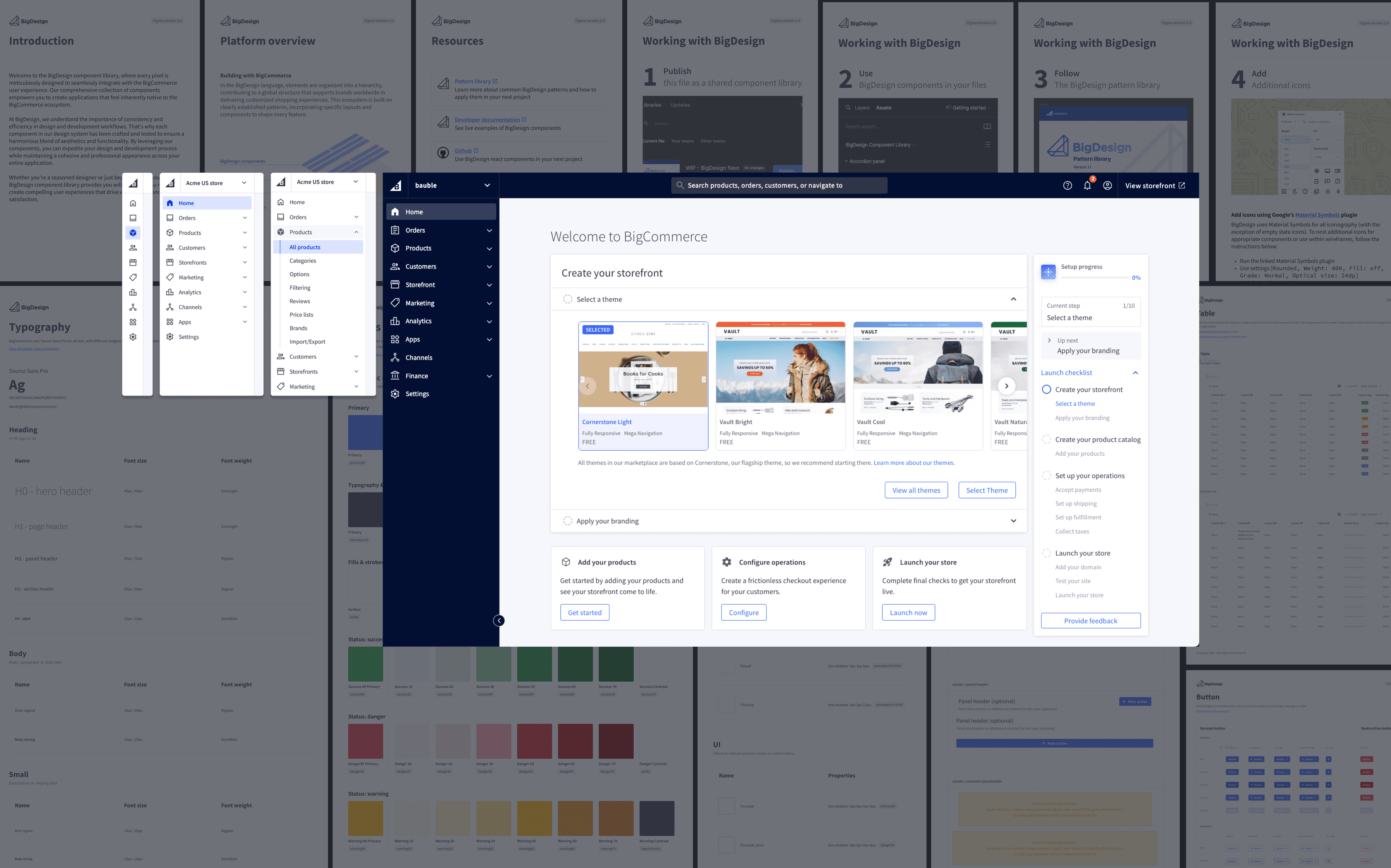
BigDesign library adoption in <6 months
BigDesign library adoption in <6 months
60%
60%
Users impacted by control panel redesign
Users impacted by control panel redesign
70k
70k
Support ticket reduction
Support ticket reduction
0%
0%
Improvement in developer efficiency
Improvement in developer efficiency
0%
0%
OVERVIEW
I drove a transformation of BigCommerce’s admin experience from a fragmented collection of domain-specific workflows into a more cohesive, scalable platform. By formalizing a Platform Design team, strengthening shared patterns, reducing UX debt, and rolling out a Control Panel navigation overhaul, I helped create a stronger foundation for quality and consistency across the product.
After 6 months of focused effort, we turned BigDesign, our design system, into a source of truth; for the first time we had a trusted, actively maintained system with clear ownership and governance that designers understood and developers bought into.
The Problem
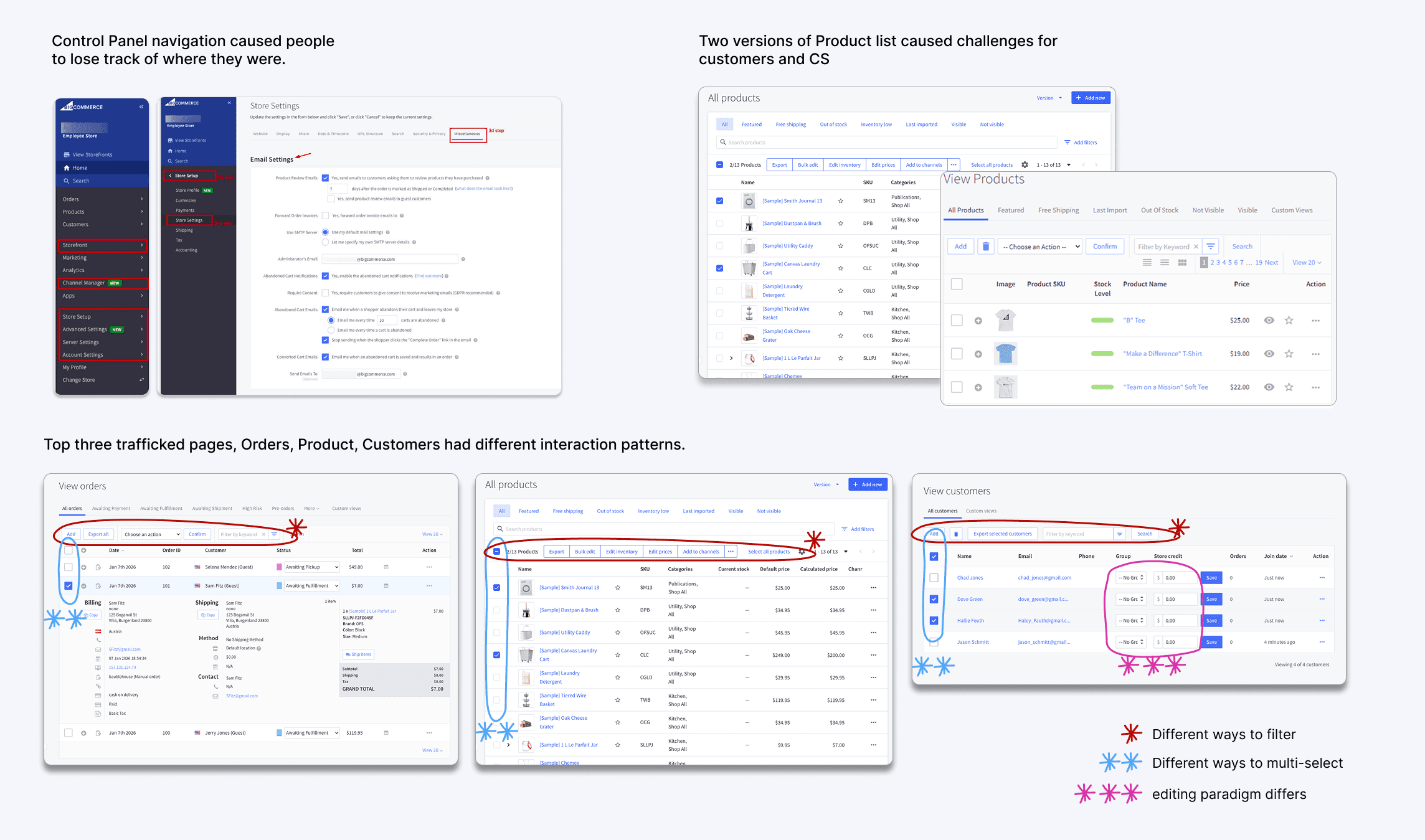
As BigCommerce moved upmarket, the experience had become fragmented across teams, domains, and technologies, undermining our perception as an enterprise-grade platform.
Key surfaces were split across Angular and React, leading to inconsistency in interaction patterns and visual design.
Designers lacked clarity on which patterns to use, and documentation was hard to navigate.
BigDesign existed, but without clear governance, ownership, or an effective path to adoption.
Core platform areas like navigation, search, and notifications were neglected for years and lacked clear ownership.
UX issues accumulated over time, while standards and accountability for product quality remained weak.
“Every time…it downloads in a different manner, I can hear the the gears of my brain grinding, maintaining consistency across page to page to page.”

David, E-commerce Manager
BigCommerce customer
Why this mattered
I saw how hard is was for the designers on my team to actually implement high quality design work. This made life hard for my team and also created a bad experience for our users.
As BigCommerce expanded across products and teams, the Control Panel experience became harder to keep coherent. Shared patterns were used inconsistently, quality varied across domains, and teams lacked a strong foundation for building with consistency and confidence.
Meanwhile, hundreds of legacy design issues had accumulated over time, making the platform feel fragmented.
This was not simply a matter of visual polish. It was about creating the systems, governance, and team alignment needed to make quality more scalable across the product.
To reduce one-off design decisions, we created product design principles grounded in a simple idea: Follow standards until they fail.
My role
I drove the effort to transform platform quality from a scattered aspiration into a more operationalized design effort. I formed the Platform Design team, aligned leadership and stakeholders around shared patterns and quality expectations, and tied that platform strategy to high-visibility product work on the roadmap.
I also:
Advanced product quality initiatives, including design principles and UX debt reduction
Advocated for dedicated ownership of the Control Panel redesign
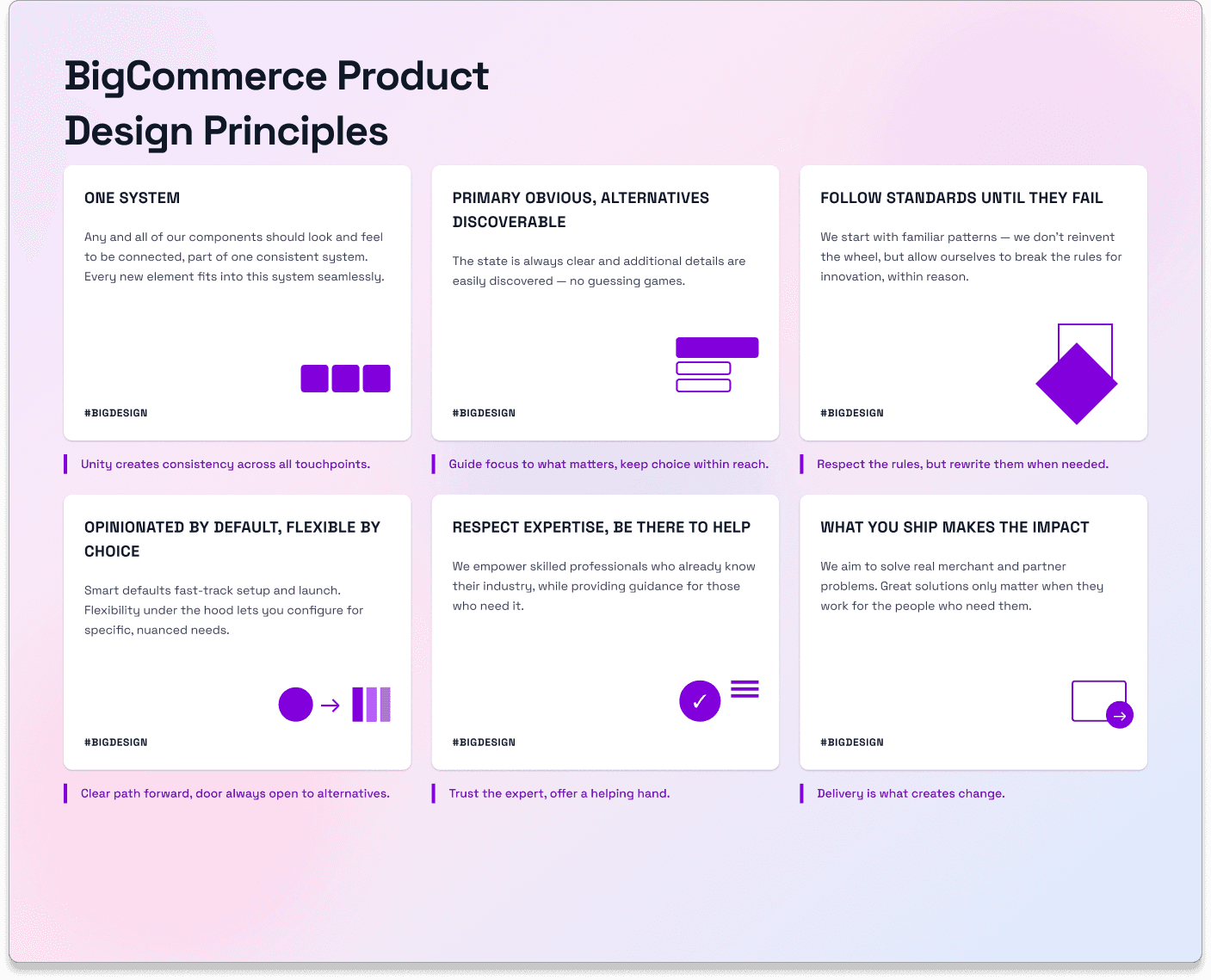
To reduce one-off design decisions, we created product design principles grounded in a simple idea: Follow standards until they fail.
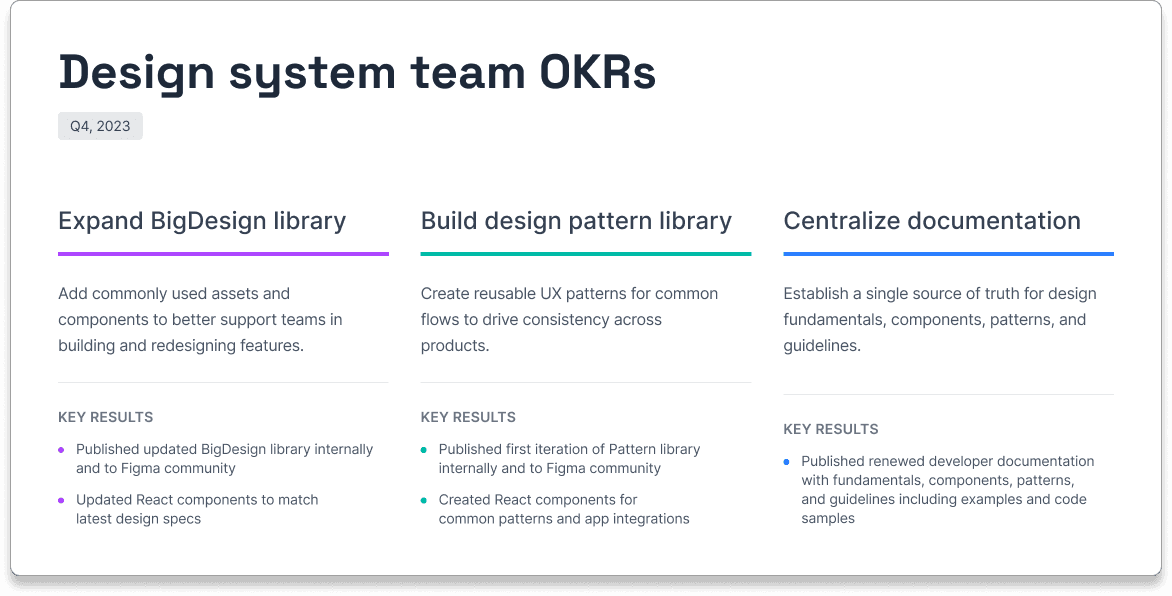
We introduced design system OKRs and turned design reviews into hands-on pattern problem solving.
We introduced design system OKRs and turned design reviews into hands-on pattern problem solving.
To reduce one-off design decisions, we created product design principles grounded in a simple idea: Follow standards until they fail.
We introduced design system OKRs and turned design reviews into hands-on pattern problem solving.
We introduced design system OKRs and turned design reviews into hands-on pattern problem solving.
What we did
Pull in
the real stats
outcome paragraph from Impact
any evidence around adoption, support burden, consistency, usage, or scale
Best visual
stat cards
optionally one supporting product screenshot
optionally the support chart, if it directly supports a stated metric
Do not overdo
You do not need multiple charts and screenshots here. One supporting artifact is enough if the stats are already visible at the top.
Control Panel as proof
Pull from old page
the old/nav confusion screenshots
the improved product list / dashboard / admin screens from Pattern solutioning
any rollout screenshots or before/after states
Use as content
A short paragraph plus 2–3 bullets:
why Control Panel mattered
what changed
what it proved
Best image treatment
A before/after pairing:
before = fragmented nav / inconsistent workflows
after = cleaner, more unified admin surfaces
OUTCOMES
Pull in
the real stats
outcome paragraph from Impact
any evidence around adoption, support burden, consistency, usage, or scale
Best visual
stat cards
optionally one supporting product screenshot
optionally the support chart, if it directly supports a stated metric
Do not overdo
You do not need multiple charts and screenshots here. One supporting artifact is enough if the stats are already visible at the top.
10. What I learned
Pull from old page
the Reflection text only
Do not pull
the decorative fingerprint / lightbulb image
That image weakens the section. The reflection should stand on its own.
If you feel this section needs balance, use a very small artifact crop or no image at all.
More Projects





Platform design
Quality at scale
Establishing Platform Quality at Scale
How I formalized Platform Design, strengthened shared patterns, and helped create a more coherent Control Panel experience across a complex B2B SaaS platform.
Year
2024–2025
Role
Director of Product Design
Company
BigCommerce
Scope
Platform design, UX quality, Navigation
BigDesign library adoption in <6 months
BigDesign library adoption in <6 months
60%
60%
Users impacted by control panel redesign
Users impacted by control panel redesign
70k
70k
Support ticket reduction
Support ticket reduction
0%
0%
Improvement in developer efficiency
Improvement in developer efficiency
0%
0%
OVERVIEW
I drove a transformation of BigCommerce’s admin experience from a fragmented collection of domain-specific workflows into a more cohesive, scalable platform. By formalizing a Platform Design team, strengthening shared patterns, reducing UX debt, and rolling out a Control Panel navigation overhaul, I helped create a stronger foundation for quality and consistency across the product.
After 6 months of focused effort, we turned BigDesign, our design system, into a source of truth; for the first time we had a trusted, actively maintained system with clear ownership and governance that designers understood and developers bought into.
The Problem
As BigCommerce moved upmarket, the experience had become fragmented across teams, domains, and technologies, undermining our perception as an enterprise-grade platform.
Key surfaces were split across Angular and React, leading to inconsistency in interaction patterns and visual design.
Designers lacked clarity on which patterns to use, and documentation was hard to navigate.
BigDesign existed, but without clear governance, ownership, or an effective path to adoption.
Core platform areas like navigation, search, and notifications were neglected for years and lacked clear ownership.
UX issues accumulated over time, while standards and accountability for product quality remained weak.
“Every time…it downloads in a different manner, I can hear the the gears of my brain grinding, maintaining consistency across page to page to page.”
David, E-commerce Manager
BigCommerce customer
Why this mattered
I saw how hard is was for the designers on my team to actually implement high quality design work. This made life hard for my team and also created a bad experience for our users.
As BigCommerce expanded across products and teams, the Control Panel experience became harder to keep coherent. Shared patterns were used inconsistently, quality varied across domains, and teams lacked a strong foundation for building with consistency and confidence.
Meanwhile, hundreds of legacy design issues had accumulated over time, making the platform feel fragmented.
This was not simply a matter of visual polish. It was about creating the systems, governance, and team alignment needed to make quality more scalable across the product.
To reduce one-off design decisions, we created product design principles grounded in a simple idea: Follow standards until they fail.
My role
I drove the effort to transform platform quality from a scattered aspiration into a more operationalized design effort. I formed the Platform Design team, aligned leadership and stakeholders around shared patterns and quality expectations, and tied that platform strategy to high-visibility product work on the roadmap.
I also:
Advanced product quality initiatives, including design principles and UX debt reduction
Advocated for dedicated ownership of the Control Panel redesign
To reduce one-off design decisions, we created product design principles grounded in a simple idea: Follow standards until they fail.
We introduced design system OKRs and turned design reviews into hands-on pattern problem solving.
We introduced design system OKRs and turned design reviews into hands-on pattern problem solving.
To reduce one-off design decisions, we created product design principles grounded in a simple idea: Follow standards until they fail.
We introduced design system OKRs and turned design reviews into hands-on pattern problem solving.
We introduced design system OKRs and turned design reviews into hands-on pattern problem solving.
What we did
Pull in
the real stats
outcome paragraph from Impact
any evidence around adoption, support burden, consistency, usage, or scale
Best visual
stat cards
optionally one supporting product screenshot
optionally the support chart, if it directly supports a stated metric
Do not overdo
You do not need multiple charts and screenshots here. One supporting artifact is enough if the stats are already visible at the top.
Control Panel as proof
Pull from old page
the old/nav confusion screenshots
the improved product list / dashboard / admin screens from Pattern solutioning
any rollout screenshots or before/after states
Use as content
A short paragraph plus 2–3 bullets:
why Control Panel mattered
what changed
what it proved
Best image treatment
A before/after pairing:
before = fragmented nav / inconsistent workflows
after = cleaner, more unified admin surfaces
OUTCOMES
Pull in
the real stats
outcome paragraph from Impact
any evidence around adoption, support burden, consistency, usage, or scale
Best visual
stat cards
optionally one supporting product screenshot
optionally the support chart, if it directly supports a stated metric
Do not overdo
You do not need multiple charts and screenshots here. One supporting artifact is enough if the stats are already visible at the top.
10. What I learned
Pull from old page
the Reflection text only
Do not pull
the decorative fingerprint / lightbulb image
That image weakens the section. The reflection should stand on its own.
If you feel this section needs balance, use a very small artifact crop or no image at all.
More Projects
Platform design
Quality at scale
Establishing Platform Quality at Scale
How I formalized Platform Design, strengthened shared patterns, and helped create a more coherent Control Panel experience across a complex B2B SaaS platform.
Year
2024–2025
Role
Director of Product Design
Company
BigCommerce
Scope
Platform design, UX quality, Navigation
BigDesign library adoption in <6 months
BigDesign library adoption in <6 months
60%
60%
Users impacted by control panel redesign
Users impacted by control panel redesign
70k
70k
Support ticket reduction
Support ticket reduction
0%
0%
Improvement in developer efficiency
Improvement in developer efficiency
0%
0%
OVERVIEW
I drove a transformation of BigCommerce’s admin experience from a fragmented collection of domain-specific workflows into a more cohesive, scalable platform. By formalizing a Platform Design team, strengthening shared patterns, reducing UX debt, and rolling out a Control Panel navigation overhaul, I helped create a stronger foundation for quality and consistency across the product.
After 6 months of focused effort, we turned BigDesign, our design system, into a source of truth; for the first time we had a trusted, actively maintained system with clear ownership and governance that designers understood and developers bought into.
The Problem
As BigCommerce moved upmarket, the experience had become fragmented across teams, domains, and technologies, undermining our perception as an enterprise-grade platform.
Key surfaces were split across Angular and React, leading to inconsistency in interaction patterns and visual design.
Designers lacked clarity on which patterns to use, and documentation was hard to navigate.
BigDesign existed, but without clear governance, ownership, or an effective path to adoption.
Core platform areas like navigation, search, and notifications were neglected for years and lacked clear ownership.
UX issues accumulated over time, while standards and accountability for product quality remained weak.
“Every time…it downloads in a different manner, I can hear the the gears of my brain grinding, maintaining consistency across page to page to page.”
David, E-commerce Manager
BigCommerce customer
Why this mattered
I saw how hard is was for the designers on my team to actually implement high quality design work. This made life hard for my team and also created a bad experience for our users.
As BigCommerce expanded across products and teams, the Control Panel experience became harder to keep coherent. Shared patterns were used inconsistently, quality varied across domains, and teams lacked a strong foundation for building with consistency and confidence.
Meanwhile, hundreds of legacy design issues had accumulated over time, making the platform feel fragmented.
This was not simply a matter of visual polish. It was about creating the systems, governance, and team alignment needed to make quality more scalable across the product.
To reduce one-off design decisions, we created product design principles grounded in a simple idea: Follow standards until they fail.
My role
I drove the effort to transform platform quality from a scattered aspiration into a more operationalized design effort. I formed the Platform Design team, aligned leadership and stakeholders around shared patterns and quality expectations, and tied that platform strategy to high-visibility product work on the roadmap.
I also:
Advanced product quality initiatives, including design principles and UX debt reduction
Advocated for dedicated ownership of the Control Panel redesign
To reduce one-off design decisions, we created product design principles grounded in a simple idea: Follow standards until they fail.
We introduced design system OKRs and turned design reviews into hands-on pattern problem solving.
We introduced design system OKRs and turned design reviews into hands-on pattern problem solving.
To reduce one-off design decisions, we created product design principles grounded in a simple idea: Follow standards until they fail.
We introduced design system OKRs and turned design reviews into hands-on pattern problem solving.
We introduced design system OKRs and turned design reviews into hands-on pattern problem solving.
What we did
Pull in
the real stats
outcome paragraph from Impact
any evidence around adoption, support burden, consistency, usage, or scale
Best visual
stat cards
optionally one supporting product screenshot
optionally the support chart, if it directly supports a stated metric
Do not overdo
You do not need multiple charts and screenshots here. One supporting artifact is enough if the stats are already visible at the top.
Control Panel as proof
Pull from old page
the old/nav confusion screenshots
the improved product list / dashboard / admin screens from Pattern solutioning
any rollout screenshots or before/after states
Use as content
A short paragraph plus 2–3 bullets:
why Control Panel mattered
what changed
what it proved
Best image treatment
A before/after pairing:
before = fragmented nav / inconsistent workflows
after = cleaner, more unified admin surfaces
OUTCOMES
Pull in
the real stats
outcome paragraph from Impact
any evidence around adoption, support burden, consistency, usage, or scale
Best visual
stat cards
optionally one supporting product screenshot
optionally the support chart, if it directly supports a stated metric
Do not overdo
You do not need multiple charts and screenshots here. One supporting artifact is enough if the stats are already visible at the top.
10. What I learned
Pull from old page
the Reflection text only
Do not pull
the decorative fingerprint / lightbulb image
That image weakens the section. The reflection should stand on its own.
If you feel this section needs balance, use a very small artifact crop or no image at all.