Strategic research
Complex workflows
Growth and retention
Global commerce
From Churn Signal to Strategic Direction
Company
BigCommerce
Role
Senior Product Design Manager —> Director, Product Design
Scope
Longitudinal research, product strategy, onboarding redesign
Year
2023-25
When our CEO raised an alarm about SMB churn, I partnered with the SMB General Manager, secured C-level sponsorship, and directed a longitudinal study that reframed churn as a launch system problem, shaping onboarding improvements that raised trial-to-paid conversion by 300%.
How I helped turn a CEO-level churn concern into a longitudinal study that explained why SMB merchants struggled in their first 90 days. This fueled our efforts to drive design for a new onboarding experience that raised trial-to-paid conversion by 300%.
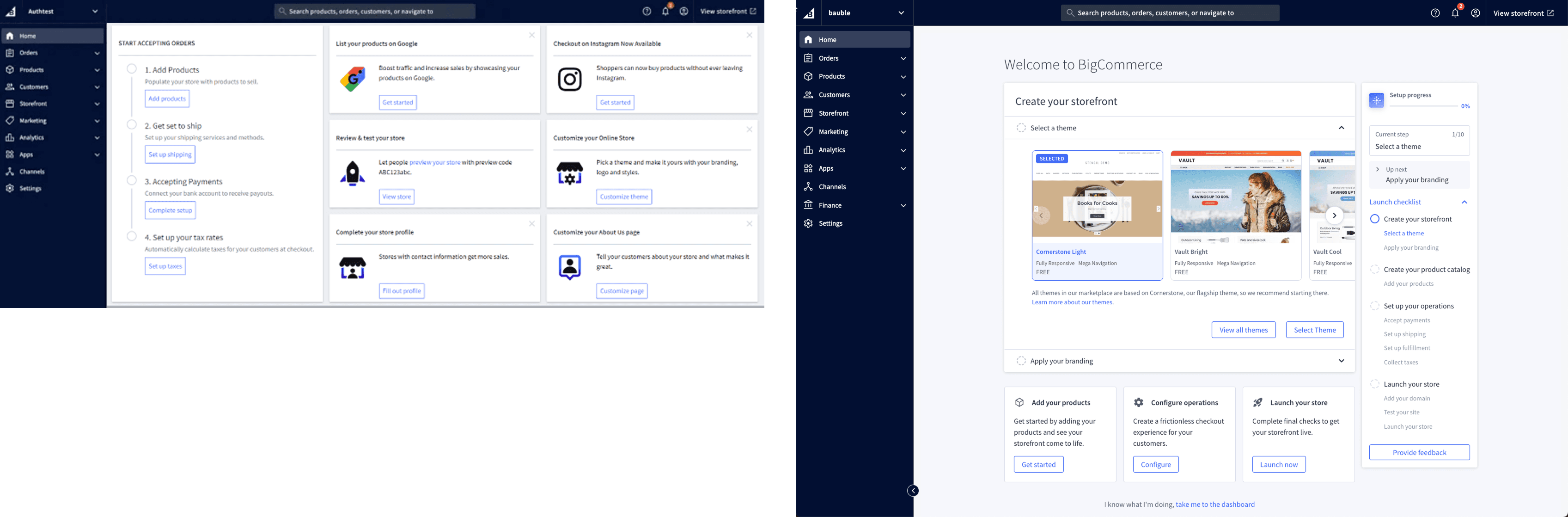
Before the onboarding experience was made up of a bunch of cards that were exploratory vs directed. The new onboarding design increased trial-to-paid conversion by 300%.
After 6 months of focused effort, we turned BigDesign, our design system, into a source of truth; for the first time we had a trusted, actively maintained system with clear ownership and governance that designers understood and developers bought into.
The CHALLENGE
BigCommerce was losing SMB merchants fast; most within 3–6 months of converting from a free trial to a paid plan. The signal was hard to ignore, but the organizational context made it complicated: the company was actively moving upstream toward Enterprise, and there was internal resistance to investing further in SMB.
That tension meant this wasn't just a research problem. Before I could answer why merchants were churning, I had to make the case that the question was worth asking at all — and that the answers would matter beyond a single customer segment.
Our CEO wanted to talk directly to merchants. I saw an opening and moved quickly: I shaped the research direction, brought a proposal to our CTO, and engaged our SMB General Manager as a cross-functional partner to give the work credibility and reach beyond Design.
The questions I needed the research to answer:
Where are merchants getting stuck in the first 60–90 days?
Is this a product problem, or an implementation, enablement, and support problem?
How do we frame findings in a way that gets teams to act — even when the company is focused elsewhere?
the approach
Three decisions shaped how this came together.
1. I chose longitudinal over fast. A snapshot survey wouldn't capture where merchants actually fell off. Two interview waves at 3 and 6 months post-signup was the only way to distinguish product problems from implementation and enablement gaps.
2. I built the cross-functional coalition. I engaged the SMB General Manager to co-own the goals, support the methodology and ensure the right level of advocacy. Partnering with her gave the research organizational legitimacy outside Product Design and ensured findings would land with teams who had authority to act.
3. I directed the research to be impactful. I engaged a UX Researcher to lead execution — study plan, participant screening, interviews, and longitudinal tracking — while I set the strategic frame, made methodology calls, and kept executive sponsors engaged. We supplemented with support case data and a survey across 95 stores to triangulate the qualitative findings.
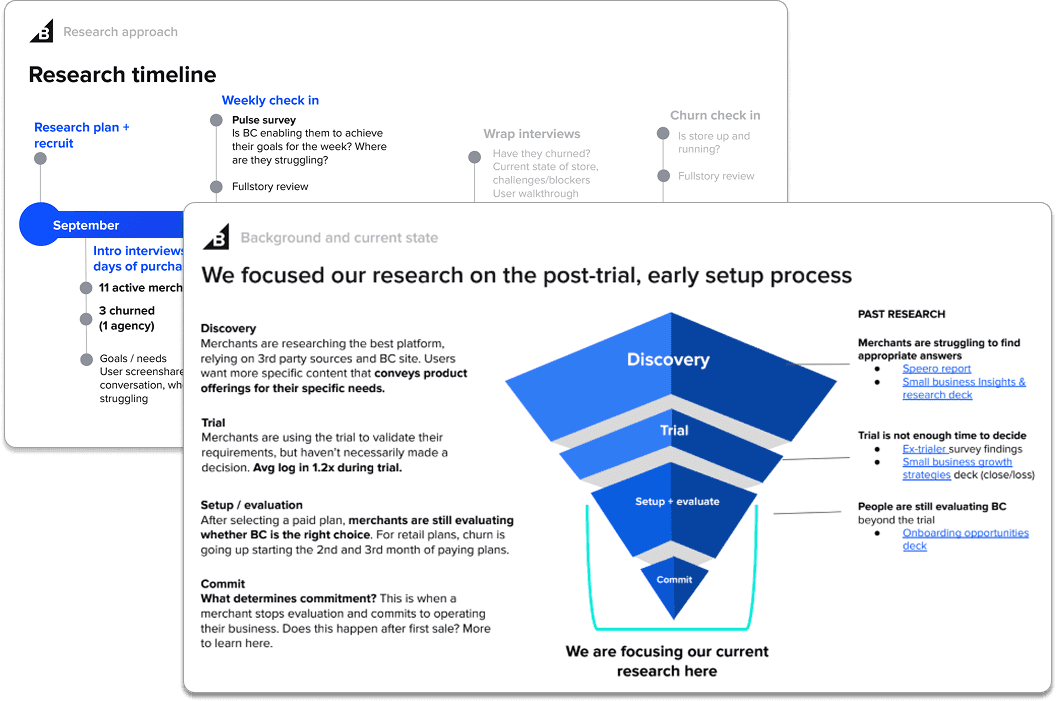
Because the churn drop off happened after the trial, we focused on the post-setup time period and tracked users for 6 months, with a read-out after 3 months.
After 6 months of focused effort, we turned BigDesign, our design system, into a source of truth; for the first time we had a trusted, actively maintained system with clear ownership and governance that designers understood and developers bought into.
After 6 months of focused effort, we turned BigDesign, our design system, into a source of truth; for the first time we had a trusted, actively maintained system with clear ownership and governance that designers understood and developers bought into.
key findings
"failure to launch" was the real churn driver
The dominant pattern was that merchants were not leaving after fully exploring the product, rather, they were churning because they couldn't get live fast enough. The experience asked too much of users too early, with too little guidance around what mattered most.
Merchants weren't leaving because of missing features — they were churning because they couldn't get live. Getting the tech stack connected, the right people trained, and the platform operational in the first 60–90 days was harder than expected. This shifted the conversation from "what features are we missing" to "how do we get merchants to see the value?"
Segment ambiguity was slowing action
Unclear definitions of "SMB" vs. "Mid-market" users made it a challenge to give domain teams a focused target. Part of the output of this research was establishing the "Complex SMB" segment definition — experienced, ambitious merchants who had deliberately chosen BigCommerce for its sophistication, which gave teams a shared mental model.
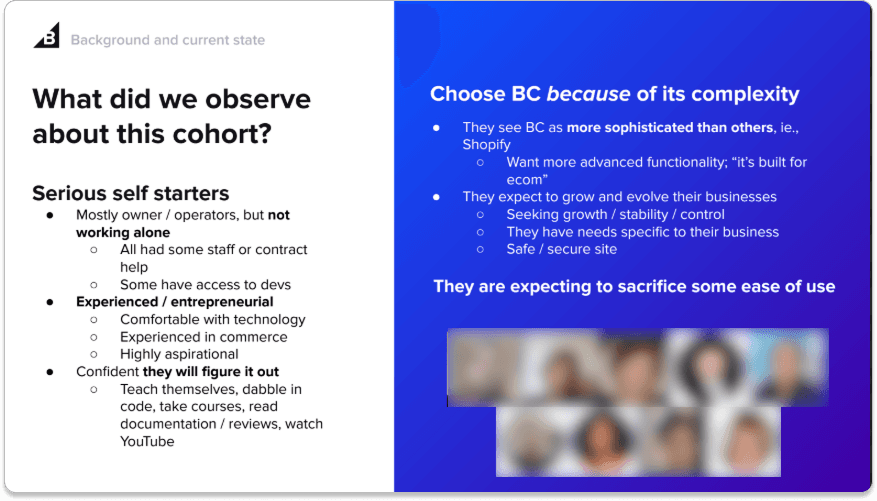
Defining the audience: through early interviews, we identified a distinct merchant profile — experienced, ambitious, and deliberately choosing BigCommerce for its sophistication. This became the foundation for the "Complex SMB" segment definition.
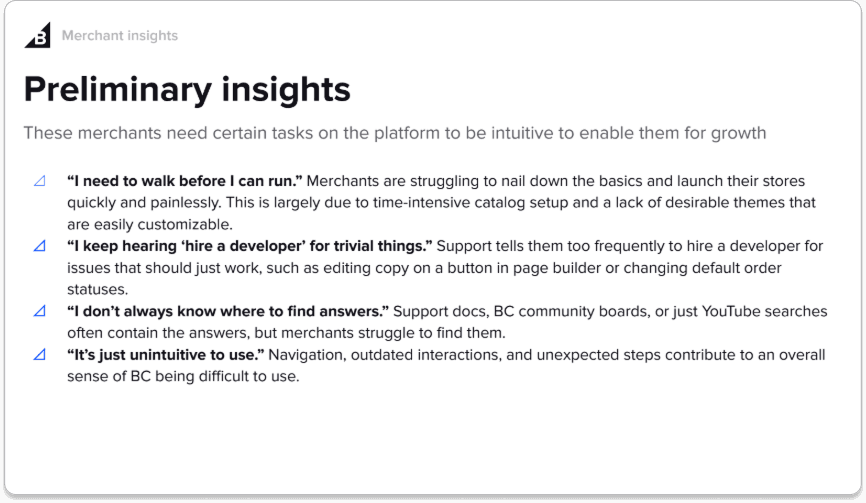
Themes we found that pointed to challenges merchants had with setting up their stores, needing to rely on developers for some tasks, having difficulty finding answers and lacking guidance.
Onboarding is a cross-functional problem
Early success depended on implementation managers, solution architects, and enablement — not just product UI. This was uncomfortable for teams used to thinking of churn as a product design issue, but it was the most actionable finding: it meant multiple teams had to make changes to improve the onboarding funnel.
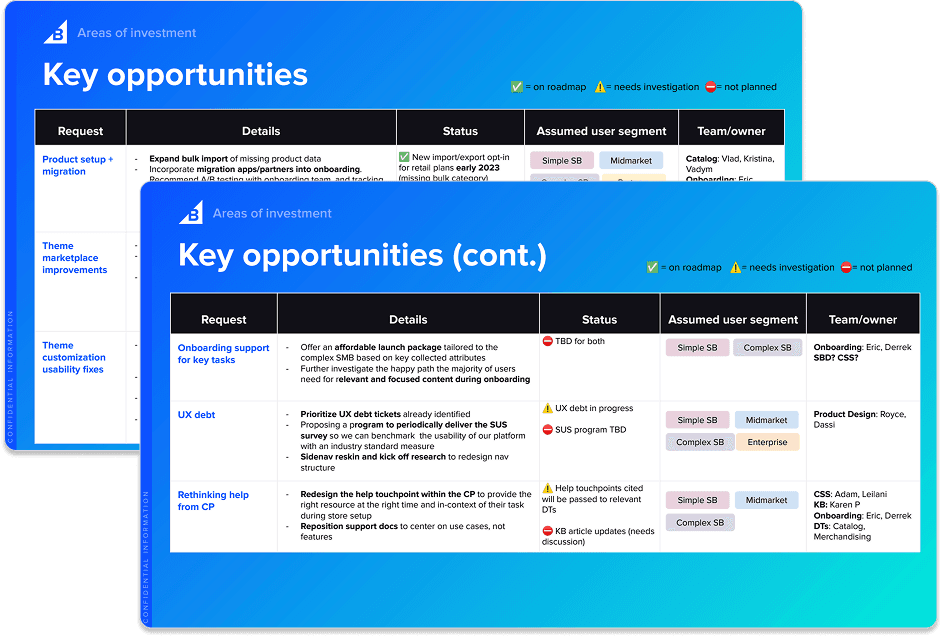
Key opportunities shared with the Executive Leadership Team and product leadership to address the pain points included improvements to product setup, onboarding, help, themes / storefront and UX debt.
onboarding redesign
Why the original experience failed
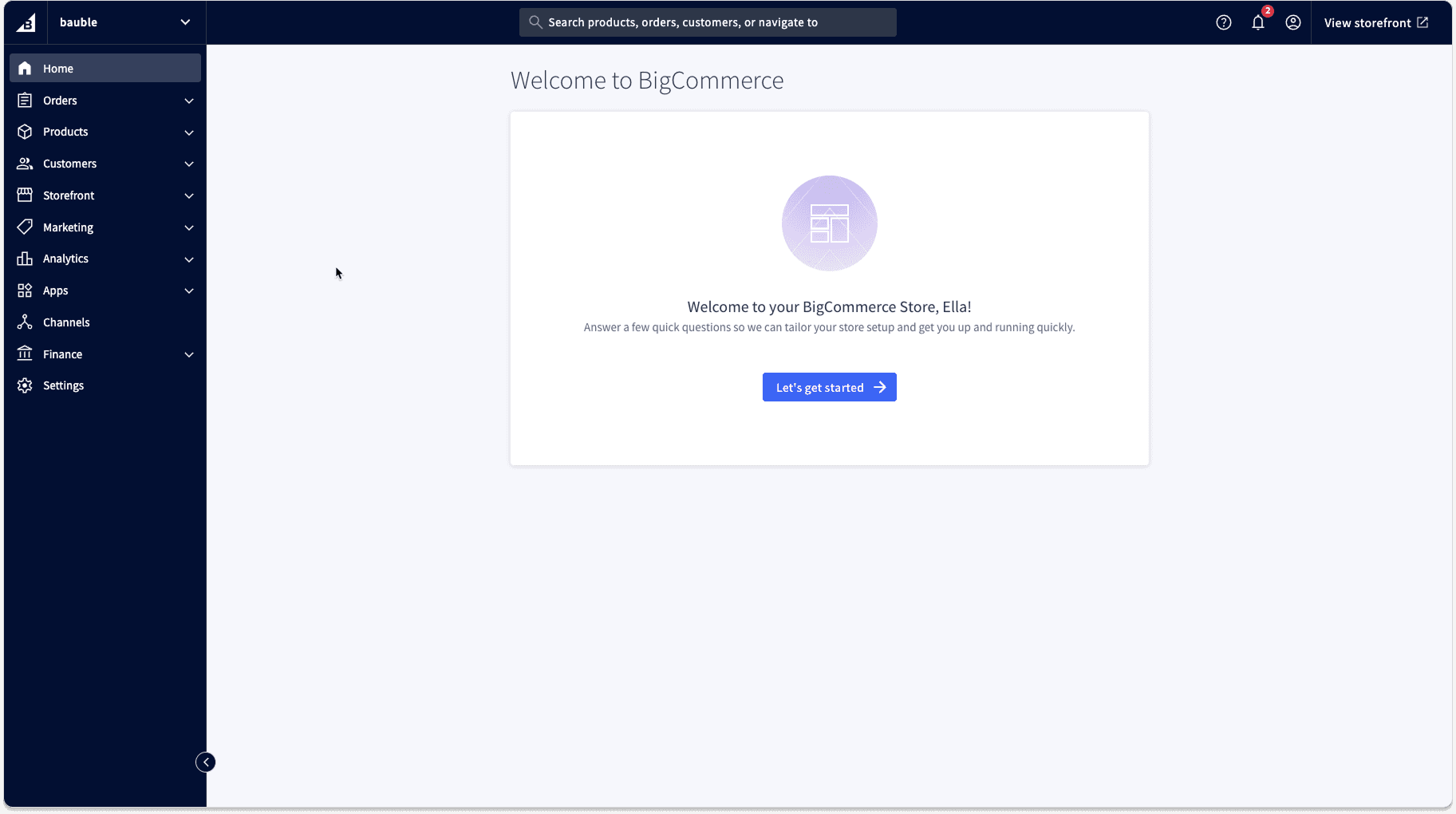
The original onboarding experience put critical setup tasks beside promotions, announcements, and other competing content. New merchants had to interpret too many options at once, with little help understanding what mattered most or what order to do things in. The result was an experience that asked too much of new merchants before they had enough context to succeed.
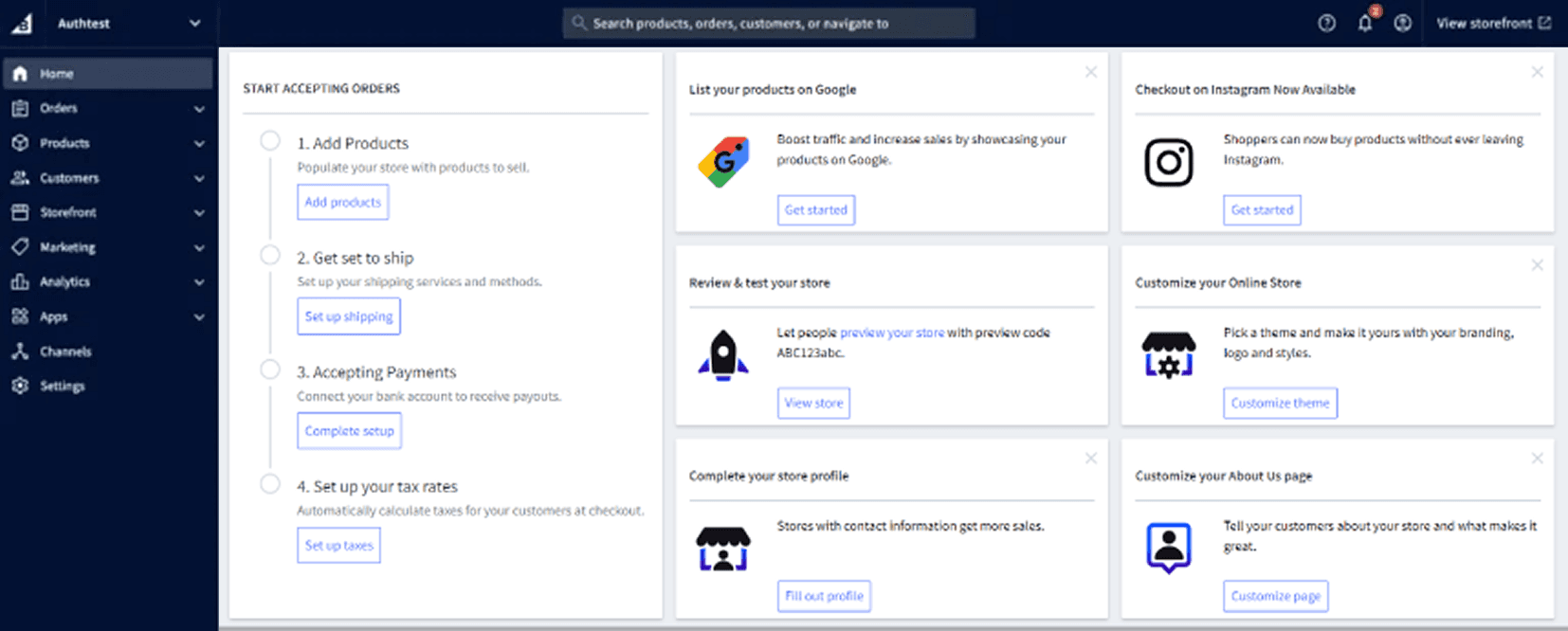
The old onboarding experience had lots of competing content so it was hard to know what to click on first.
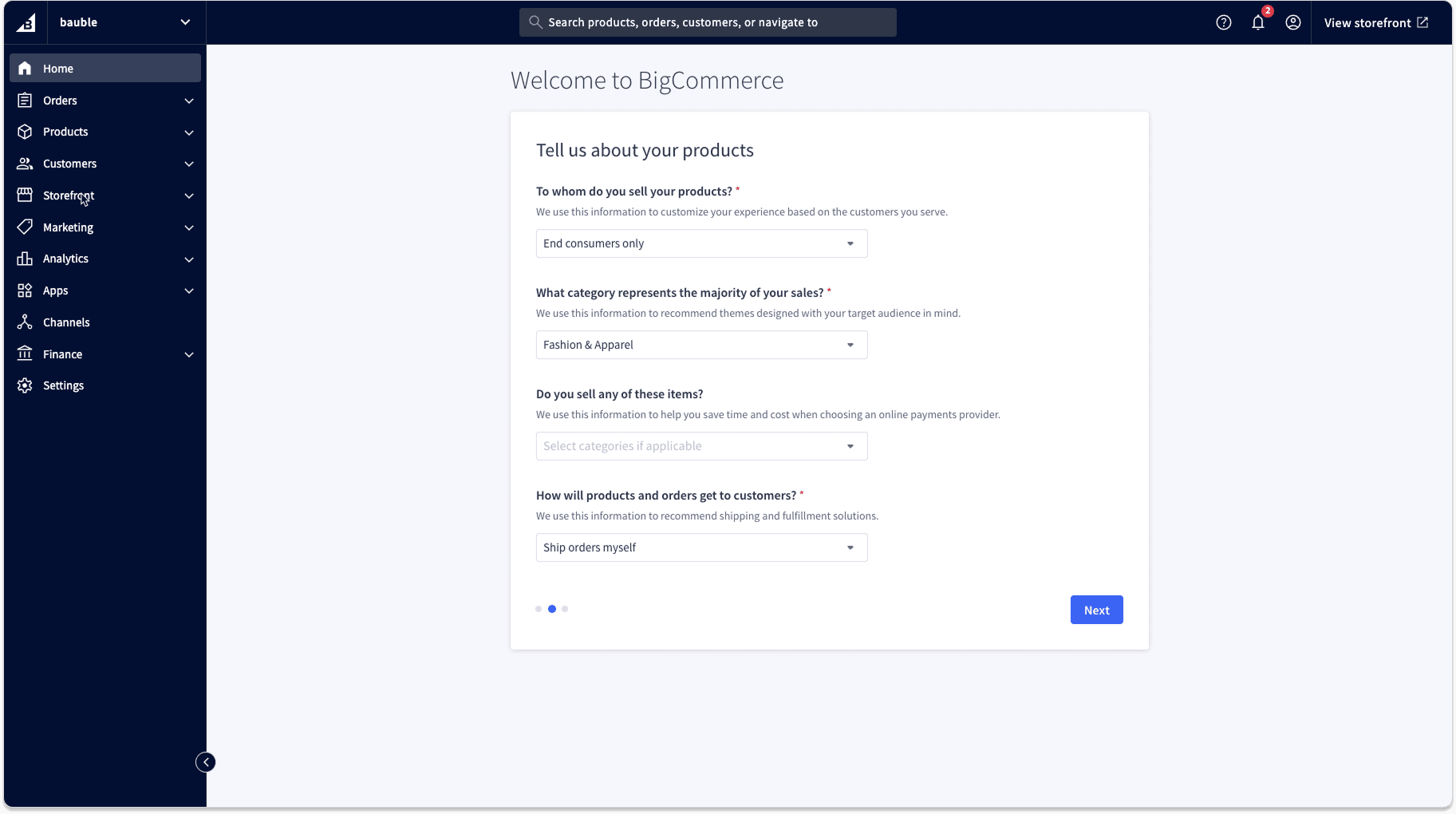
We designed better guidance
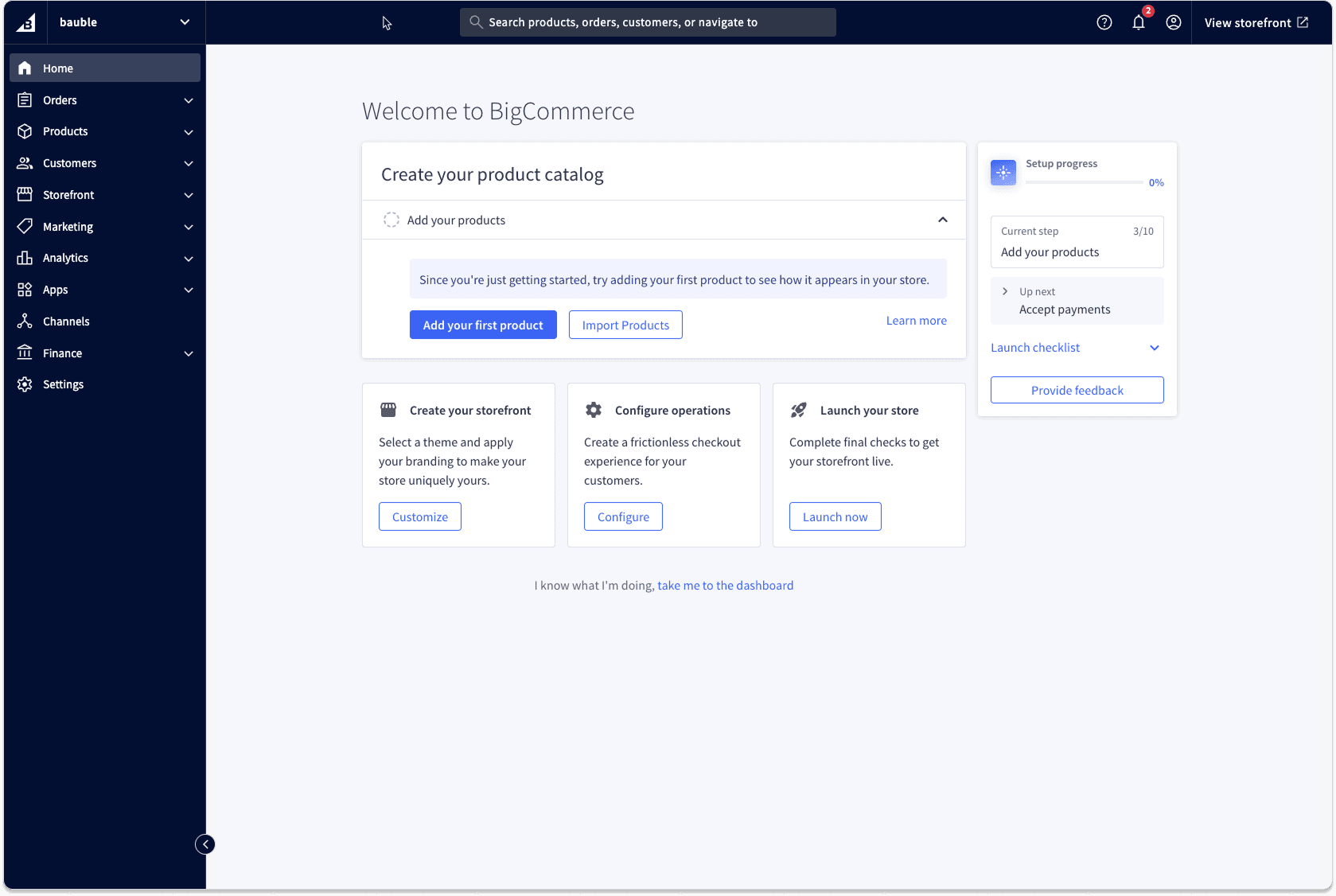
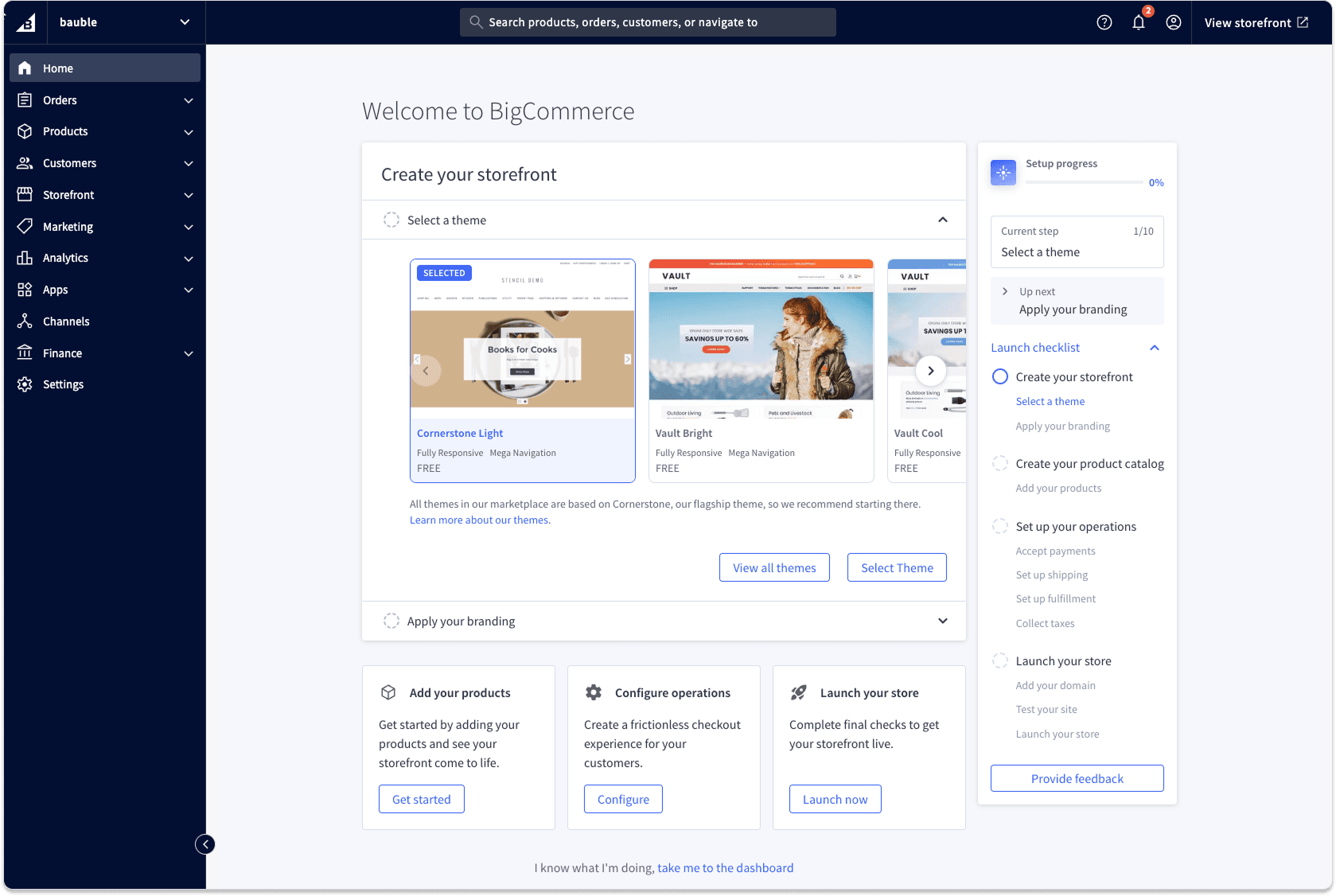
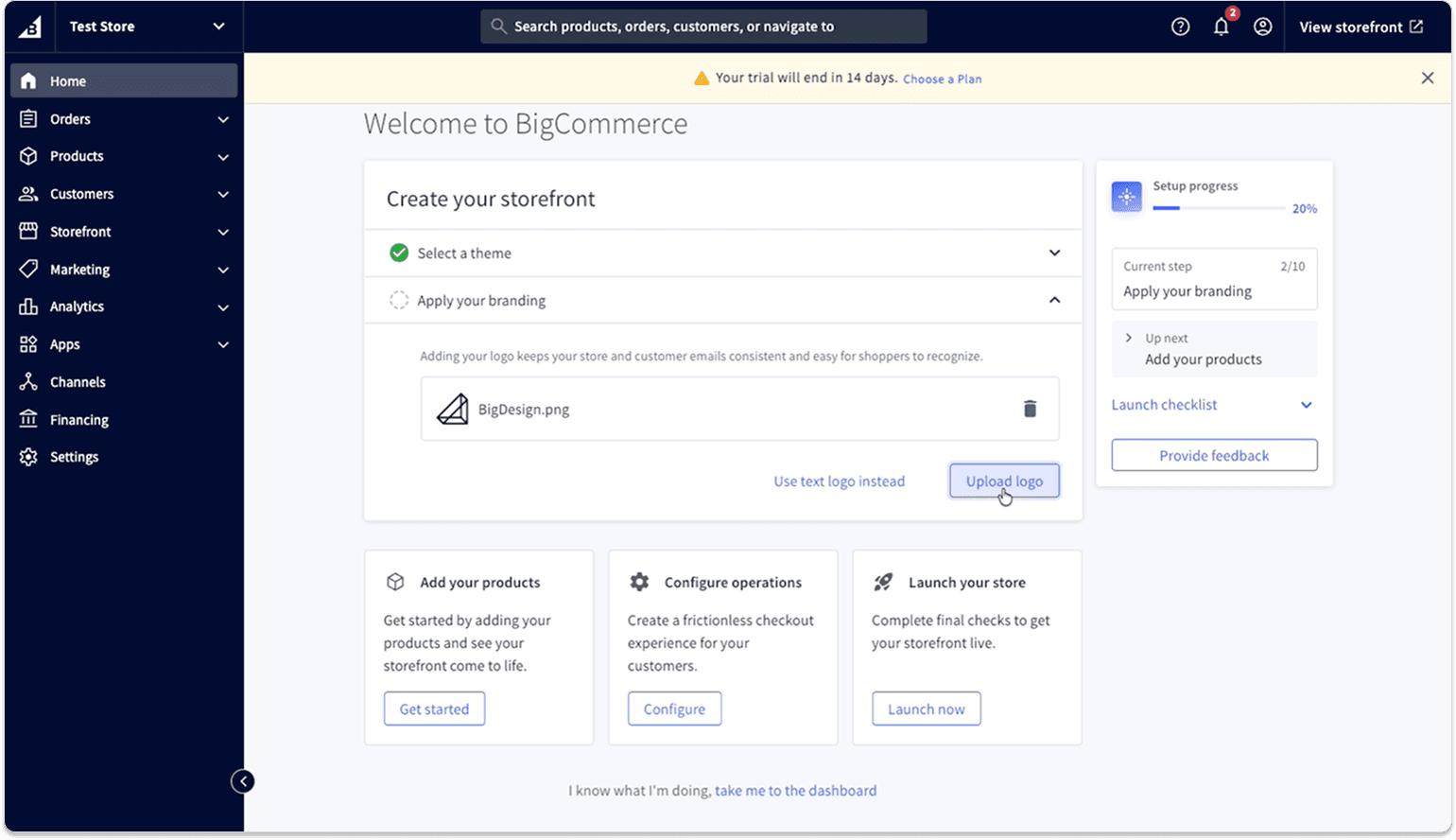
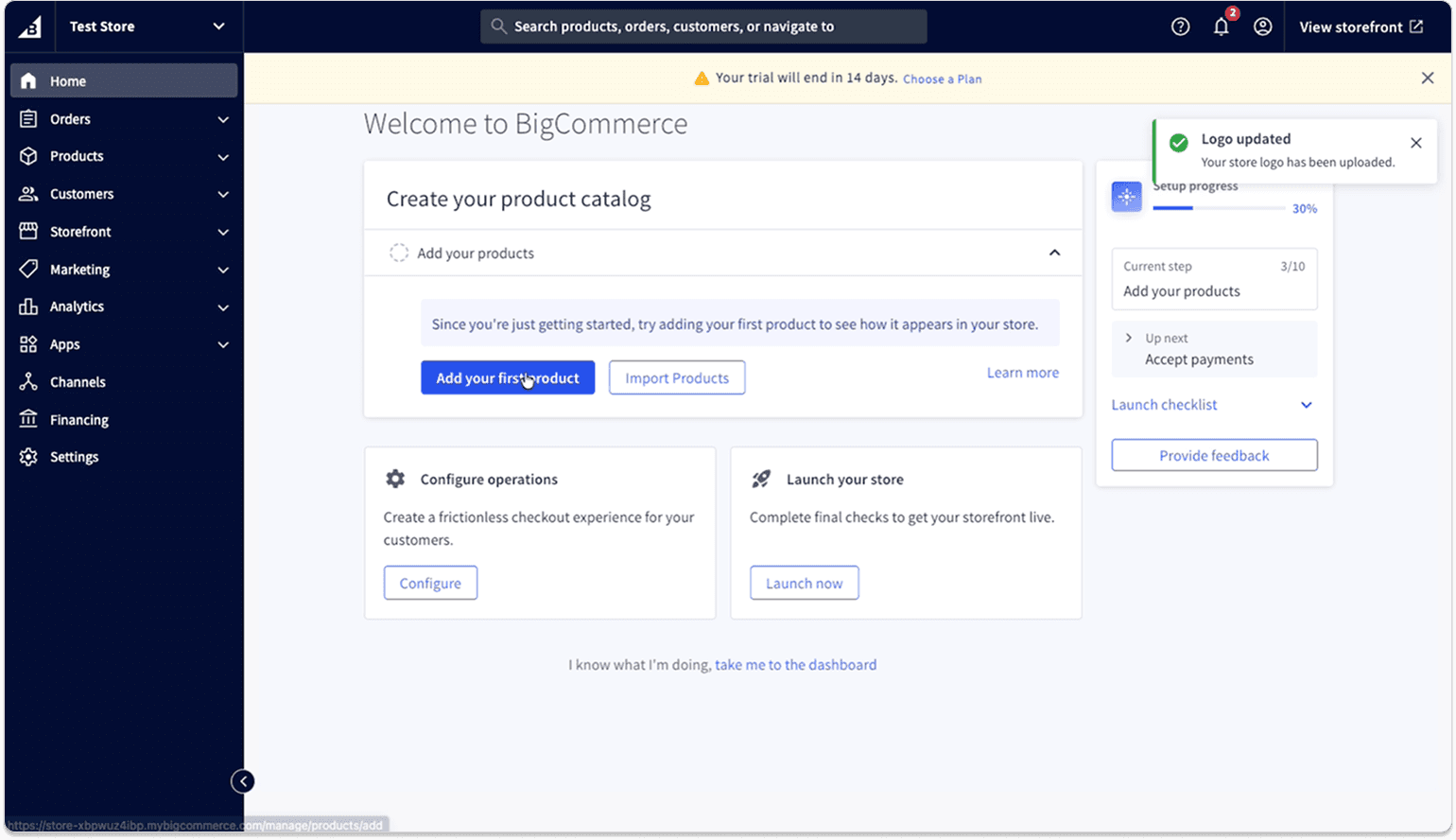
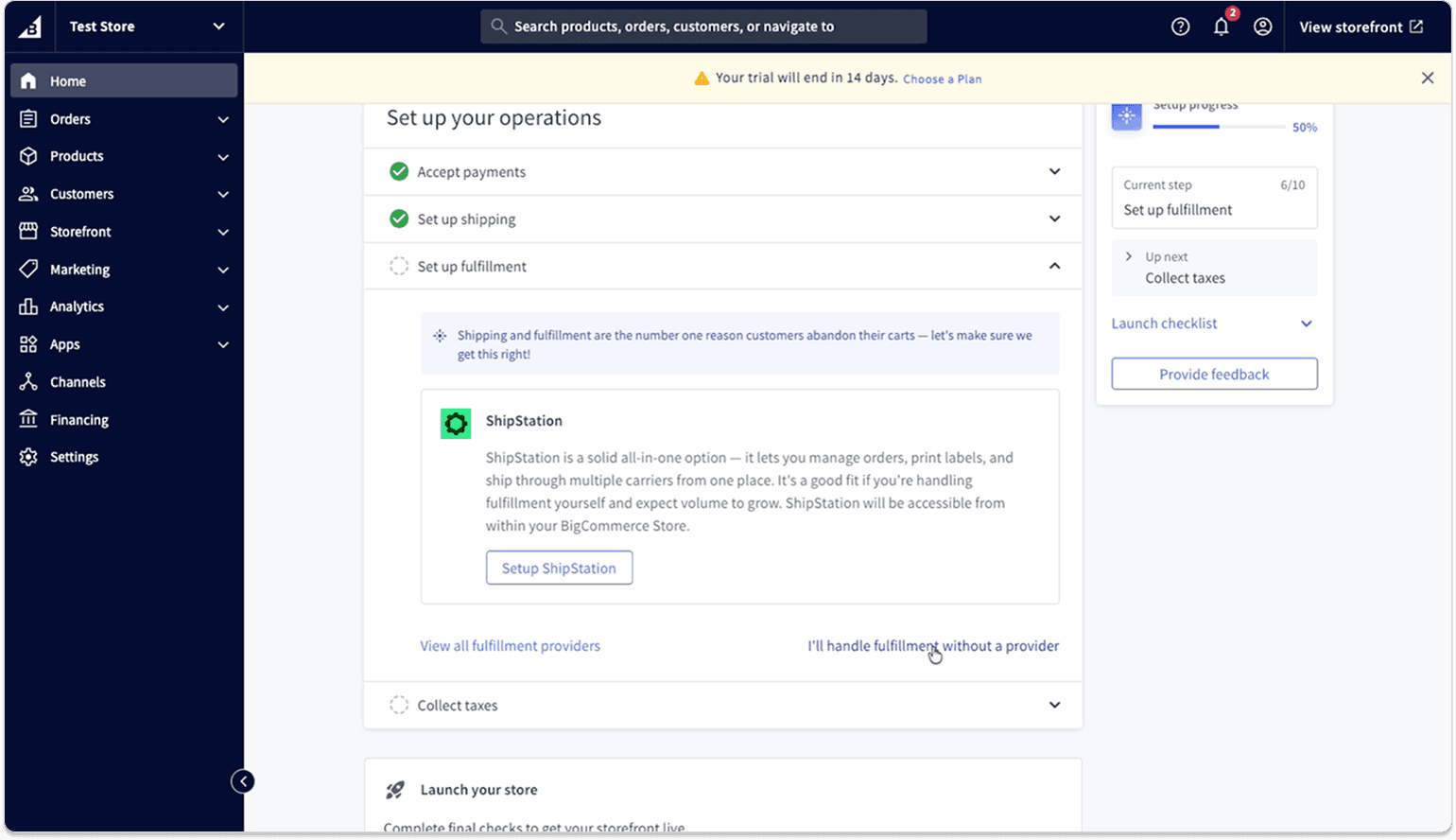
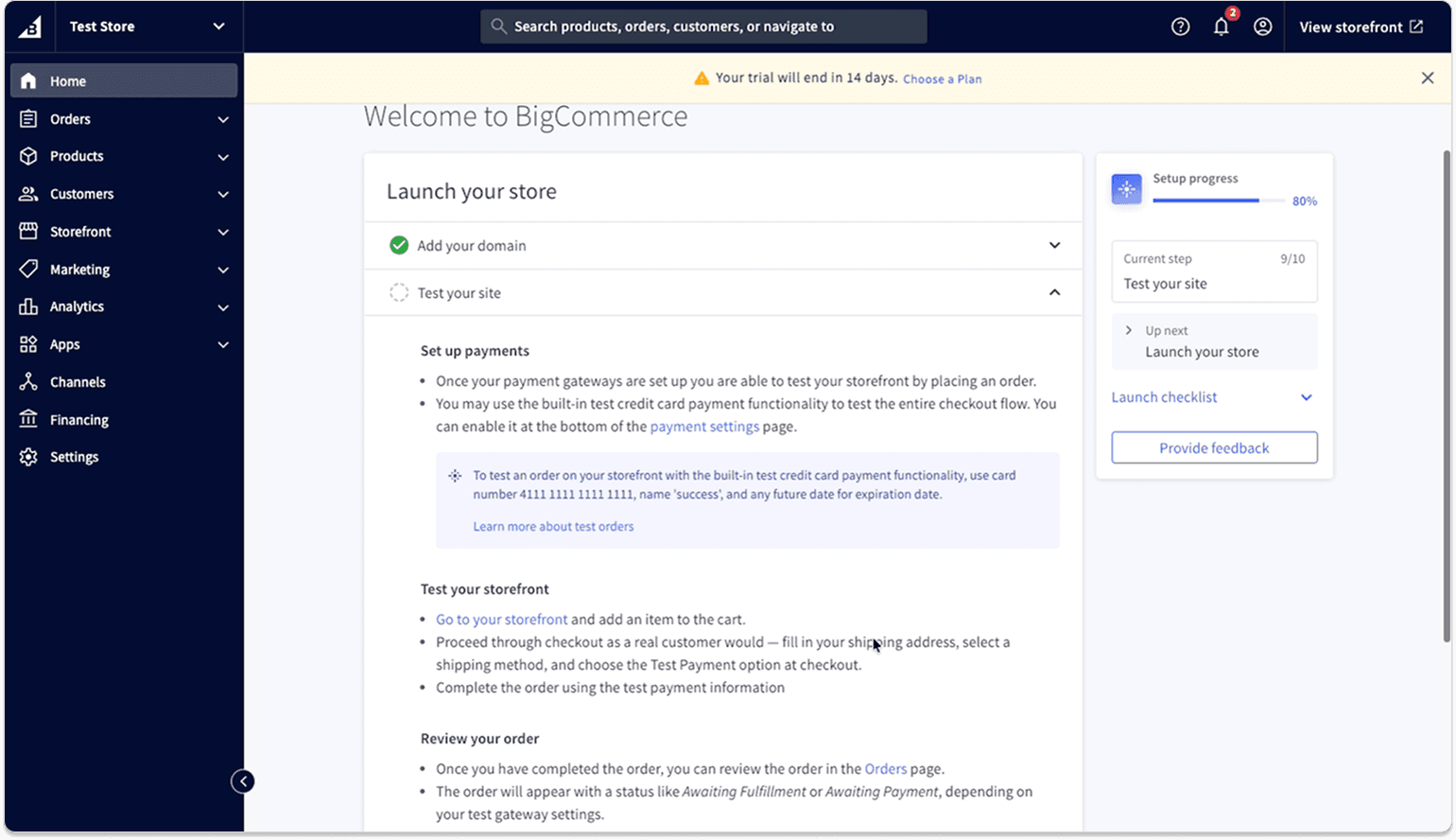
The research helped us spur designs that envisioned a more structured onboarding model centered on the tasks merchants actually needed to complete to get live: create a storefront, add products, configure operations, and launch. The concept emphasized clearer sequencing, progressive disclosure, better feedback loops, and the ability to personalize the experience over time.
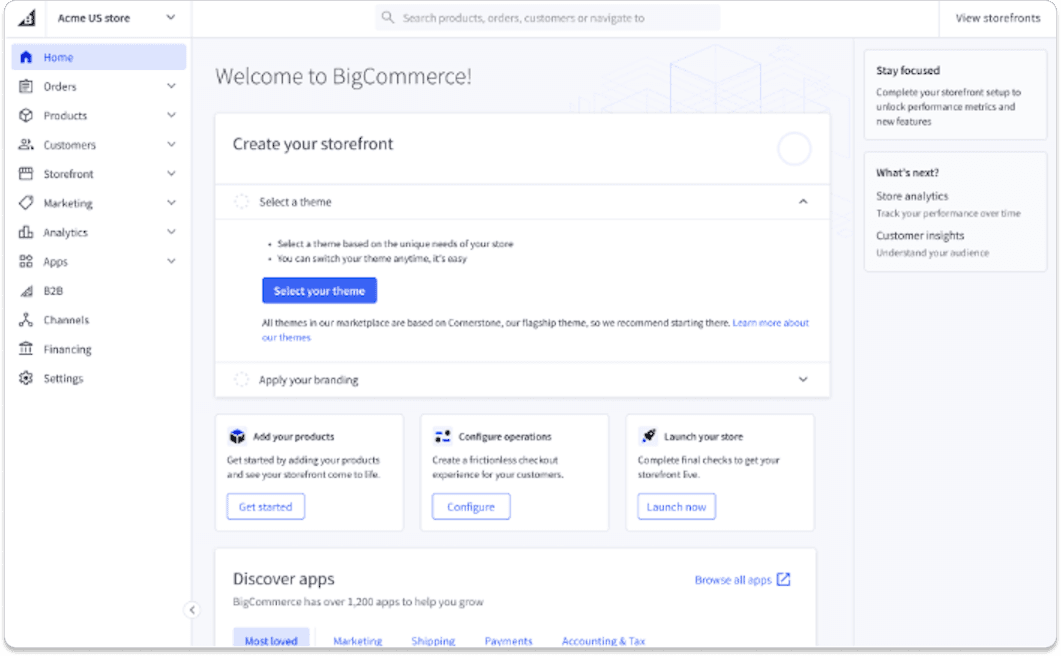
First-touch experience focuses on creating storefront, adding products, setting up operations testing and launch.
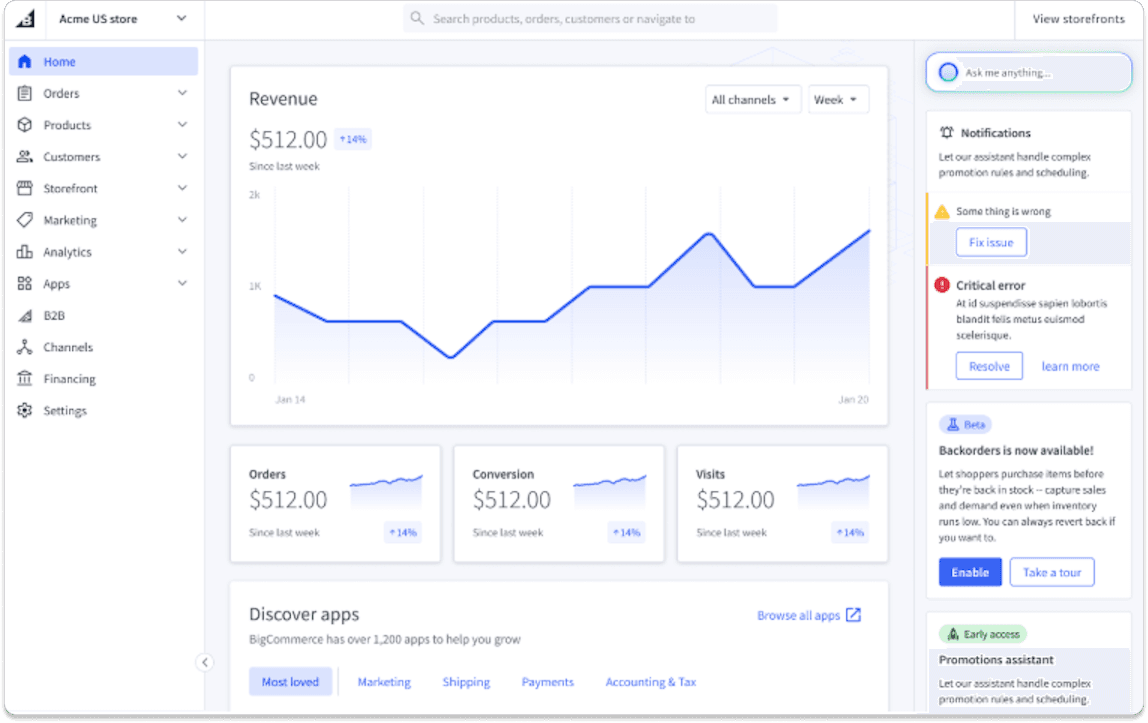
After setup, the right hand side turns into a more involved, helpful interface that surfaces notifications and new features.
what shipped
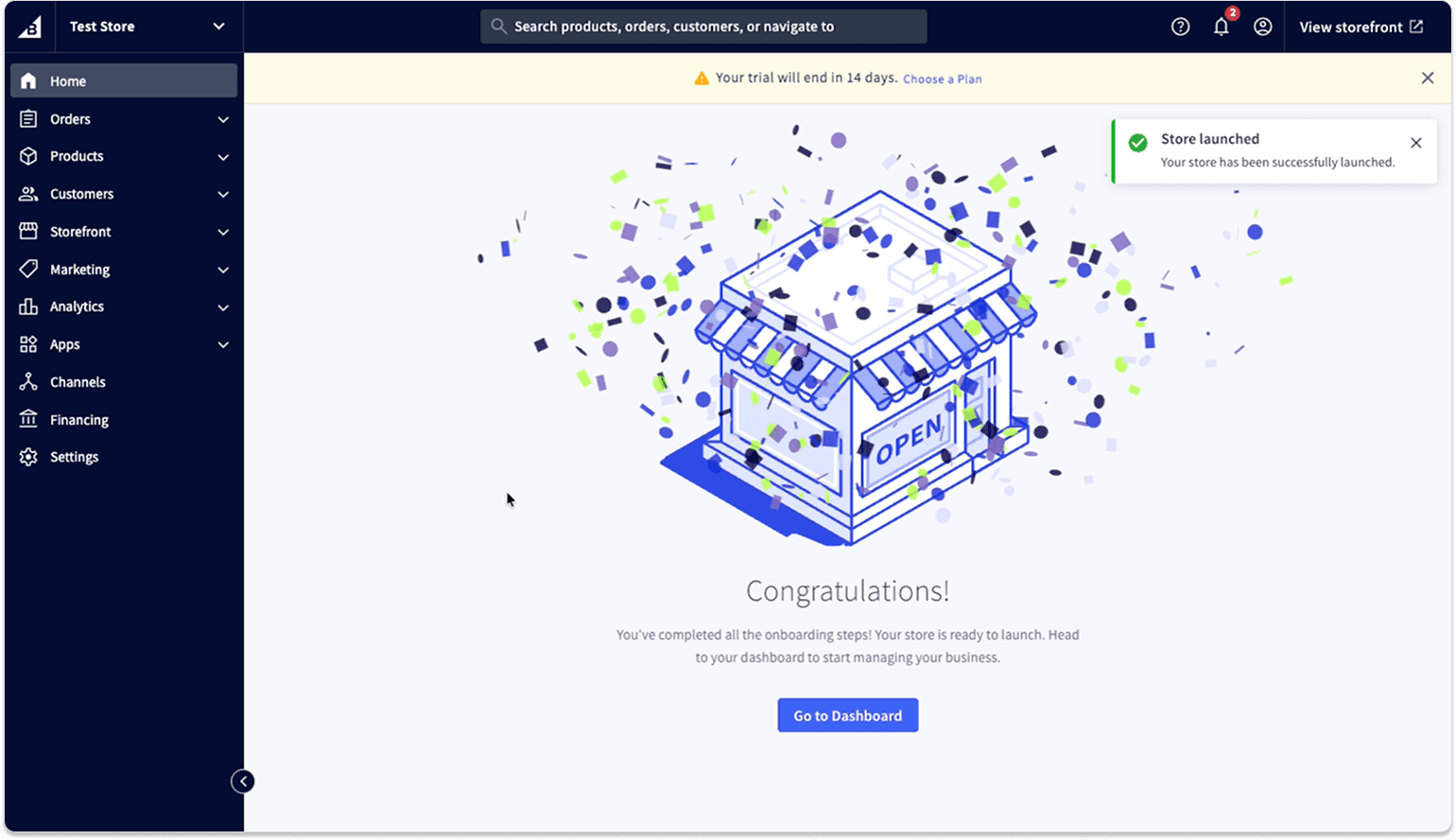
Using the research, my team proposed a more structured onboarding model centered on the jobs merchants actually needed to complete to get live: create a storefront, add products, configure operations, and launch. The concept emphasized clearer sequencing, progressive disclosure, better guidance, and a more scalable foundation for the dashboard itself.
outcomes
Reframed churn as a launch system problem — shifting how Onboarding, Catalog and Themes & Merchandising prioritized work
Introduced the "Complex SMB" segment definition, adopted across Product and Marketing as a shared reference point
Presented findings to the CEO and Executive Leadership Team, directly influencing early-lifecycle investment priorities
Set the groundwork for follow-on Enterprise research that surfaced three core themes — "completion," "migration," and "e-commerce basics" — shaping a new company strategy called "Back to Basics"
The onboarding improvements that followed raised trial-to-paid conversion by 300%
Merchants in longitudinal study
0
0
0
0
Increase in trial to paid conversion
0%
0%
0%
0%
outcomes
The research helped reframe onboarding as a core churn and growth opportunity rather than a secondary UX cleanup. It gave leadership a clearer understanding of where merchants were failing to launch and helped focus attention on activation, usability, and setup sequencing.
The onboarding work that followed raised trial-to-paid conversion from 5.5% to 15%. Just as importantly, the new tracking exposed additional problem areas — especially around taxes — and helped kick off a broader cycle of data-driven improvements.
Merchants in longitudinal study
0
0
Increase in trial to paid conversion
0%
0%
reflection
This project reinforced something I’ve seen repeatedly in platform design: churn is often less about a single missing feature and more about whether users can successfully get to value in the first place. The research mattered because it gave us the right problem framing.
The bigger shift came from turning that framing into product direction and helping the team move from “why are people leaving?” to “what do merchants need in order to launch successfully?”
It also reinforced the value of measurement. Once stronger onboarding tracking was in place, the team could look beyond where the redesign was working to where the next problems were hiding. That made the work more than a redesign — it became the start of a more data-driven improvement loop.
Strategic research
Complex workflows
Growth and retention
Global commerce
From Churn Signal to Strategic Direction
Company
BigCommerce
Role
Senior Product Design Manager —> Director, Product Design
Scope
Longitudinal research, product strategy, onboarding redesign
Year
2023-25
When our CEO raised an alarm about SMB churn, I partnered with the SMB General Manager, secured C-level sponsorship, and directed a longitudinal study that reframed churn as a launch system problem, shaping onboarding improvements that raised trial-to-paid conversion by 300%.
How I helped turn a CEO-level churn concern into a longitudinal study that explained why SMB merchants struggled in their first 90 days. This fueled our efforts to drive design for a new onboarding experience that raised trial-to-paid conversion by 300%.
Before the onboarding experience was made up of a bunch of cards that were exploratory vs directed. The new onboarding design increased trial-to-paid conversion by 300%.
After 6 months of focused effort, we turned BigDesign, our design system, into a source of truth; for the first time we had a trusted, actively maintained system with clear ownership and governance that designers understood and developers bought into.
The CHALLENGE
BigCommerce was losing SMB merchants fast; most within 3–6 months of converting from a free trial to a paid plan. The signal was hard to ignore, but the organizational context made it complicated: the company was actively moving upstream toward Enterprise, and there was internal resistance to investing further in SMB.
That tension meant this wasn't just a research problem. Before I could answer why merchants were churning, I had to make the case that the question was worth asking at all — and that the answers would matter beyond a single customer segment.
Our CEO wanted to talk directly to merchants. I saw an opening and moved quickly: I shaped the research direction, brought a proposal to our CTO, and engaged our SMB General Manager as a cross-functional partner to give the work credibility and reach beyond Design.
The questions I needed the research to answer:
Where are merchants getting stuck in the first 60–90 days?
Is this a product problem, or an implementation, enablement, and support problem?
How do we frame findings in a way that gets teams to act — even when the company is focused elsewhere?
the approach
Three decisions shaped how this came together.
1. I chose longitudinal over fast. A snapshot survey wouldn't capture where merchants actually fell off. Two interview waves at 3 and 6 months post-signup was the only way to distinguish product problems from implementation and enablement gaps.
2. I built the cross-functional coalition. I engaged the SMB General Manager to co-own the goals, support the methodology and ensure the right level of advocacy. Partnering with her gave the research organizational legitimacy outside Product Design and ensured findings would land with teams who had authority to act.
3. I directed the research to be impactful. I engaged a UX Researcher to lead execution — study plan, participant screening, interviews, and longitudinal tracking — while I set the strategic frame, made methodology calls, and kept executive sponsors engaged. We supplemented with support case data and a survey across 95 stores to triangulate the qualitative findings.
Because the churn drop off happened after the trial, we focused on the post-setup time period and tracked users for 6 months, with a read-out after 3 months.
After 6 months of focused effort, we turned BigDesign, our design system, into a source of truth; for the first time we had a trusted, actively maintained system with clear ownership and governance that designers understood and developers bought into.
After 6 months of focused effort, we turned BigDesign, our design system, into a source of truth; for the first time we had a trusted, actively maintained system with clear ownership and governance that designers understood and developers bought into.
key findings
"failure to launch" was the real churn driver
The dominant pattern was that merchants were not leaving after fully exploring the product, rather, they were churning because they couldn't get live fast enough. The experience asked too much of users too early, with too little guidance around what mattered most.
Merchants weren't leaving because of missing features — they were churning because they couldn't get live. Getting the tech stack connected, the right people trained, and the platform operational in the first 60–90 days was harder than expected. This shifted the conversation from "what features are we missing" to "how do we get merchants to see the value?"
Segment ambiguity was slowing action
Unclear definitions of "SMB" vs. "Mid-market" users made it a challenge to give domain teams a focused target. Part of the output of this research was establishing the "Complex SMB" segment definition — experienced, ambitious merchants who had deliberately chosen BigCommerce for its sophistication, which gave teams a shared mental model.
Defining the audience: through early interviews, we identified a distinct merchant profile — experienced, ambitious, and deliberately choosing BigCommerce for its sophistication. This became the foundation for the "Complex SMB" segment definition.
Themes we found that pointed to challenges merchants had with setting up their stores, needing to rely on developers for some tasks, having difficulty finding answers and lacking guidance.
Onboarding is a cross-functional problem
Early success depended on implementation managers, solution architects, and enablement — not just product UI. This was uncomfortable for teams used to thinking of churn as a product design issue, but it was the most actionable finding: it meant multiple teams had to make changes to improve the onboarding funnel.
Key opportunities shared with the Executive Leadership Team and product leadership to address the pain points included improvements to product setup, onboarding, help, themes / storefront and UX debt.
onboarding redesign
Why the original experience failed
The original onboarding experience put critical setup tasks beside promotions, announcements, and other competing content. New merchants had to interpret too many options at once, with little help understanding what mattered most or what order to do things in. The result was an experience that asked too much of new merchants before they had enough context to succeed.
The old onboarding experience had lots of competing content so it was hard to know what to click on first.
We designed better guidance
The research helped us spur designs that envisioned a more structured onboarding model centered on the tasks merchants actually needed to complete to get live: create a storefront, add products, configure operations, and launch. The concept emphasized clearer sequencing, progressive disclosure, better feedback loops, and the ability to personalize the experience over time.
First-touch experience focuses on creating storefront, adding products, setting up operations testing and launch.
After setup, the right hand side turns into a more involved, helpful interface that surfaces notifications and new features.
what shipped
Using the research, my team proposed a more structured onboarding model centered on the jobs merchants actually needed to complete to get live: create a storefront, add products, configure operations, and launch. The concept emphasized clearer sequencing, progressive disclosure, better guidance, and a more scalable foundation for the dashboard itself.
outcomes
Reframed churn as a launch system problem — shifting how Onboarding, Catalog and Themes & Merchandising prioritized work
Introduced the "Complex SMB" segment definition, adopted across Product and Marketing as a shared reference point
Presented findings to the CEO and Executive Leadership Team, directly influencing early-lifecycle investment priorities
Set the groundwork for follow-on Enterprise research that surfaced three core themes — "completion," "migration," and "e-commerce basics" — shaping a new company strategy called "Back to Basics"
The onboarding improvements that followed raised trial-to-paid conversion by 300%
Merchants in longitudinal study
0
0
0
0
Increase in trial to paid conversion
0%
0%
0%
0%
outcomes
The research helped reframe onboarding as a core churn and growth opportunity rather than a secondary UX cleanup. It gave leadership a clearer understanding of where merchants were failing to launch and helped focus attention on activation, usability, and setup sequencing.
The onboarding work that followed raised trial-to-paid conversion from 5.5% to 15%. Just as importantly, the new tracking exposed additional problem areas — especially around taxes — and helped kick off a broader cycle of data-driven improvements.
Merchants in longitudinal study
0
0
Increase in trial to paid conversion
0%
0%
reflection
This project reinforced something I’ve seen repeatedly in platform design: churn is often less about a single missing feature and more about whether users can successfully get to value in the first place. The research mattered because it gave us the right problem framing.
The bigger shift came from turning that framing into product direction and helping the team move from “why are people leaving?” to “what do merchants need in order to launch successfully?”
It also reinforced the value of measurement. Once stronger onboarding tracking was in place, the team could look beyond where the redesign was working to where the next problems were hiding. That made the work more than a redesign — it became the start of a more data-driven improvement loop.
Strategic research
Complex workflows
Growth and retention
Global commerce
From Churn Signal to Strategic Direction
Company
BigCommerce
Role
Senior Product Design Manager —> Director, Product Design
Scope
Longitudinal research, product strategy, onboarding redesign
Year
2023-25
When our CEO raised an alarm about SMB churn, I partnered with the SMB General Manager, secured C-level sponsorship, and directed a longitudinal study that reframed churn as a launch system problem, shaping onboarding improvements that raised trial-to-paid conversion by 300%.
How I helped turn a CEO-level churn concern into a longitudinal study that explained why SMB merchants struggled in their first 90 days. This fueled our efforts to drive design for a new onboarding experience that raised trial-to-paid conversion by 300%.
Before the onboarding experience was made up of a bunch of cards that were exploratory vs directed. The new onboarding design increased trial-to-paid conversion by 300%.
After 6 months of focused effort, we turned BigDesign, our design system, into a source of truth; for the first time we had a trusted, actively maintained system with clear ownership and governance that designers understood and developers bought into.
The CHALLENGE
BigCommerce was losing SMB merchants fast; most within 3–6 months of converting from a free trial to a paid plan. The signal was hard to ignore, but the organizational context made it complicated: the company was actively moving upstream toward Enterprise, and there was internal resistance to investing further in SMB.
That tension meant this wasn't just a research problem. Before I could answer why merchants were churning, I had to make the case that the question was worth asking at all — and that the answers would matter beyond a single customer segment.
Our CEO wanted to talk directly to merchants. I saw an opening and moved quickly: I shaped the research direction, brought a proposal to our CTO, and engaged our SMB General Manager as a cross-functional partner to give the work credibility and reach beyond Design.
The questions I needed the research to answer:
Where are merchants getting stuck in the first 60–90 days?
Is this a product problem, or an implementation, enablement, and support problem?
How do we frame findings in a way that gets teams to act — even when the company is focused elsewhere?
the approach
Three decisions shaped how this came together.
1. I chose longitudinal over fast. A snapshot survey wouldn't capture where merchants actually fell off. Two interview waves at 3 and 6 months post-signup was the only way to distinguish product problems from implementation and enablement gaps.
2. I built the cross-functional coalition. I engaged the SMB General Manager to co-own the goals, support the methodology and ensure the right level of advocacy. Partnering with her gave the research organizational legitimacy outside Product Design and ensured findings would land with teams who had authority to act.
3. I directed the research to be impactful. I engaged a UX Researcher to lead execution — study plan, participant screening, interviews, and longitudinal tracking — while I set the strategic frame, made methodology calls, and kept executive sponsors engaged. We supplemented with support case data and a survey across 95 stores to triangulate the qualitative findings.
Because the churn drop off happened after the trial, we focused on the post-setup time period and tracked users for 6 months, with a read-out after 3 months.
After 6 months of focused effort, we turned BigDesign, our design system, into a source of truth; for the first time we had a trusted, actively maintained system with clear ownership and governance that designers understood and developers bought into.
After 6 months of focused effort, we turned BigDesign, our design system, into a source of truth; for the first time we had a trusted, actively maintained system with clear ownership and governance that designers understood and developers bought into.
key findings
"failure to launch" was the real churn driver
The dominant pattern was that merchants were not leaving after fully exploring the product, rather, they were churning because they couldn't get live fast enough. The experience asked too much of users too early, with too little guidance around what mattered most.
Merchants weren't leaving because of missing features — they were churning because they couldn't get live. Getting the tech stack connected, the right people trained, and the platform operational in the first 60–90 days was harder than expected. This shifted the conversation from "what features are we missing" to "how do we get merchants to see the value?"
Segment ambiguity was slowing action
Unclear definitions of "SMB" vs. "Mid-market" users made it a challenge to give domain teams a focused target. Part of the output of this research was establishing the "Complex SMB" segment definition — experienced, ambitious merchants who had deliberately chosen BigCommerce for its sophistication, which gave teams a shared mental model.
Defining the audience: through early interviews, we identified a distinct merchant profile — experienced, ambitious, and deliberately choosing BigCommerce for its sophistication. This became the foundation for the "Complex SMB" segment definition.
Themes we found that pointed to challenges merchants had with setting up their stores, needing to rely on developers for some tasks, having difficulty finding answers and lacking guidance.
Onboarding is a cross-functional problem
Early success depended on implementation managers, solution architects, and enablement — not just product UI. This was uncomfortable for teams used to thinking of churn as a product design issue, but it was the most actionable finding: it meant multiple teams had to make changes to improve the onboarding funnel.
Key opportunities shared with the Executive Leadership Team and product leadership to address the pain points included improvements to product setup, onboarding, help, themes / storefront and UX debt.
onboarding redesign
Why the original experience failed
The original onboarding experience put critical setup tasks beside promotions, announcements, and other competing content. New merchants had to interpret too many options at once, with little help understanding what mattered most or what order to do things in. The result was an experience that asked too much of new merchants before they had enough context to succeed.
The old onboarding experience had lots of competing content so it was hard to know what to click on first.
We designed better guidance
The research helped us spur designs that envisioned a more structured onboarding model centered on the tasks merchants actually needed to complete to get live: create a storefront, add products, configure operations, and launch. The concept emphasized clearer sequencing, progressive disclosure, better feedback loops, and the ability to personalize the experience over time.
First-touch experience focuses on creating storefront, adding products, setting up operations testing and launch.
After setup, the right hand side turns into a more involved, helpful interface that surfaces notifications and new features.
what shipped
Using the research, my team proposed a more structured onboarding model centered on the jobs merchants actually needed to complete to get live: create a storefront, add products, configure operations, and launch. The concept emphasized clearer sequencing, progressive disclosure, better guidance, and a more scalable foundation for the dashboard itself.
outcomes
Reframed churn as a launch system problem — shifting how Onboarding, Catalog and Themes & Merchandising prioritized work
Introduced the "Complex SMB" segment definition, adopted across Product and Marketing as a shared reference point
Presented findings to the CEO and Executive Leadership Team, directly influencing early-lifecycle investment priorities
Set the groundwork for follow-on Enterprise research that surfaced three core themes — "completion," "migration," and "e-commerce basics" — shaping a new company strategy called "Back to Basics"
The onboarding improvements that followed raised trial-to-paid conversion by 300%
Merchants in longitudinal study
0
0
0
0
Increase in trial to paid conversion
0%
0%
0%
0%
outcomes
The research helped reframe onboarding as a core churn and growth opportunity rather than a secondary UX cleanup. It gave leadership a clearer understanding of where merchants were failing to launch and helped focus attention on activation, usability, and setup sequencing.
The onboarding work that followed raised trial-to-paid conversion from 5.5% to 15%. Just as importantly, the new tracking exposed additional problem areas — especially around taxes — and helped kick off a broader cycle of data-driven improvements.
Merchants in longitudinal study
0
0
Increase in trial to paid conversion
0%
0%
reflection
This project reinforced something I’ve seen repeatedly in platform design: churn is often less about a single missing feature and more about whether users can successfully get to value in the first place. The research mattered because it gave us the right problem framing.
The bigger shift came from turning that framing into product direction and helping the team move from “why are people leaving?” to “what do merchants need in order to launch successfully?”
It also reinforced the value of measurement. Once stronger onboarding tracking was in place, the team could look beyond where the redesign was working to where the next problems were hiding. That made the work more than a redesign — it became the start of a more data-driven improvement loop.